Your Anti-Inflammatory Diet Might Be Making Things Worse — Here's Why
Your Anti-Inflammatory Diet Might Be Making Things Worse — Here's Why
Somewhere between the açaí bowls and the "inflammation-fighting" granola bars, something went wrong. You did everything right — or at least, everything the wellness aisle told you to do. And yet you're still dealing with brain fog, achy joints, low energy, or that general sense that your body is running hotter than it should.
Here's the uncomfortable truth: a lot of what gets marketed as anti-inflammatory in the US is anything but. The gap between how food is sold and what it actually does inside your body is wider than most people realize. And closing that gap starts with understanding what inflammation really is — and what's actually feeding it.
Inflammation Isn't the Enemy (Until It Is)
Let's get one thing straight: inflammation isn't inherently bad. It's your immune system doing its job — responding to injury, infection, or stress. Short-term, acute inflammation is protective. The problem is chronic inflammation — the low-grade, persistent kind that simmers in the background for months or years.
Chronic inflammation has been linked to a long list of serious conditions, including heart disease, type 2 diabetes, autoimmune disorders, and even depression. And unlike a sprained ankle, you don't always feel it happening. It's quiet. Sneaky. And often, what you're eating every day is keeping it alive.
The Health Halo Problem
Food marketing in America has gotten very good at borrowing the language of wellness without delivering the substance. Terms like "natural," "plant-based," "clean," and yes, "anti-inflammatory" aren't regulated the way you might hope. That means a product can slap those words on its label while still being packed with ingredients that actively promote inflammation.
Some of the biggest offenders? Foods you'd never suspect.
Flavored nut milks and oat milks often contain added sugars and carrageenan — a thickener derived from seaweed that some research suggests may trigger gut inflammation in certain people.
"Healthy" salad dressings and marinades are frequently made with refined seed oils like soybean, canola, or sunflower oil. These oils are sky-high in omega-6 fatty acids. In isolation, omega-6s aren't villains — but the modern American diet already delivers them in excess. When your omega-6 to omega-3 ratio gets wildly out of balance (and for most Americans, it is), it creates a biochemical environment that encourages inflammatory pathways to stay switched on.
Protein bars and wellness snacks are another trap. Many are sweetened with high-fructose corn syrup or sugar alcohols, loaded with artificial flavors, and bound together with inflammatory oils — all while advertising turmeric or ginger as featured ingredients. A few milligrams of curcumin can't outrun several grams of refined sugar.
The Seed Oil Situation
It's worth pausing on refined seed oils because they're genuinely everywhere, and the conversation around them has gotten louder for good reason.
Oils like corn, soybean, cottonseed, and refined sunflower oil dominate processed food manufacturing in the US because they're cheap and shelf-stable. But they're also heavily processed — often extracted using high heat and chemical solvents — and they're disproportionately high in linoleic acid, an omega-6 fat.
Your body needs some omega-6. The issue is the ratio. Historically, humans consumed omega-6 and omega-3 fatty acids at roughly a 4:1 ratio. Today, the average American is closer to 20:1. That imbalance doesn't just sit there — it actively tilts your body's inflammatory response toward the "on" position.
The fix isn't to demonize all fats. It's to be strategic. Prioritize oils like extra virgin olive oil, avocado oil, and coconut oil for cooking. Increase omega-3 intake through fatty fish, walnuts, flaxseed, or a quality fish oil supplement. And start reading ingredient labels on packaged foods — if "soybean oil" or "vegetable oil" is in the top five ingredients, it's worth reconsidering.
Added Sugar: The Inflammation Accelerant Nobody Talks About Enough
You probably already know that sugar isn't great for you. But do you know why it's so problematic from an inflammation standpoint?
When you consume excess sugar — especially refined sugar and high-fructose corn syrup — your body triggers a release of inflammatory cytokines. It also feeds harmful gut bacteria, disrupts the microbiome balance, and contributes to insulin resistance, all of which are closely tied to systemic inflammation.
The sneaky part is where that sugar hides. It's in your "antioxidant" fruit juice. It's in the flavored Greek yogurt you eat for the probiotics. It's in the wellness smoothie mix and the "lightly sweetened" kombucha. Many Americans are consuming 17 teaspoons of added sugar per day — well above the recommended limit — while genuinely believing their diet is clean.
Get in the habit of checking the "Added Sugars" line on the nutrition facts panel. The American Heart Association recommends no more than 25 grams per day for women and 36 grams for men. Many single-serving "health" products blow past that on their own.
What an Actually Anti-Inflammatory Diet Looks Like
Once you strip away the marketing noise, the framework for reducing chronic inflammation through food becomes pretty clear. It's not complicated — it's just not always convenient.
Eat more whole, minimally processed foods. Vegetables, fruits, legumes, whole grains, nuts, and seeds in their least-processed forms are foundational. The fiber alone does meaningful work by feeding beneficial gut bacteria and reducing inflammatory markers.
Prioritize omega-3 rich foods. Wild-caught salmon, sardines, mackerel, chia seeds, hemp seeds, and walnuts are your friends. If you're not eating fatty fish two or more times a week, a high-quality omega-3 supplement is worth considering.
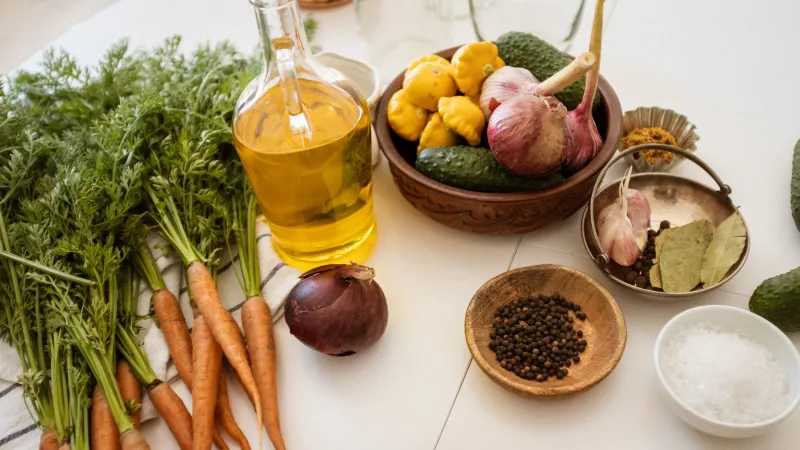
Use olive oil generously. Extra virgin olive oil contains oleocanthal, a compound that functions similarly to ibuprofen in terms of its anti-inflammatory action. It's one of the most well-researched foods in the context of inflammation.
Spice with intention. Turmeric (especially paired with black pepper for absorption), ginger, garlic, and cinnamon all have legitimate anti-inflammatory properties backed by research. Use them in actual cooking — not just as label decoration on a granola bar.
Cut back on ultra-processed food overall. This is the big one. Ultra-processed foods — defined by researchers as formulations made mostly from substances extracted or derived from foods, with little to no whole food content — are consistently associated with elevated inflammatory markers in large population studies. If the ingredient list reads like a chemistry textbook, that's a signal.
Read the Label Before You Trust the Front of the Package
The front of a package is a sales pitch. The back is closer to the truth. Before you buy into the anti-inflammatory promise of any packaged product, flip it over. Check the added sugar content, scan for refined seed oils in the ingredient list, and look for artificial additives or preservatives.
It takes about 30 extra seconds and it will change how you shop entirely.
Inflammation is one of the most important levers you can pull for long-term health — and food is one of the most direct ways to move it in the right direction. But that only works when what you're eating is actually doing the job the label claims. Don't let the wellness aisle gaslight you into thinking you're covered when you're not.
Your body deserves the real thing.