Your Salad Is Lying to You — And Your Waistline Already Knows It
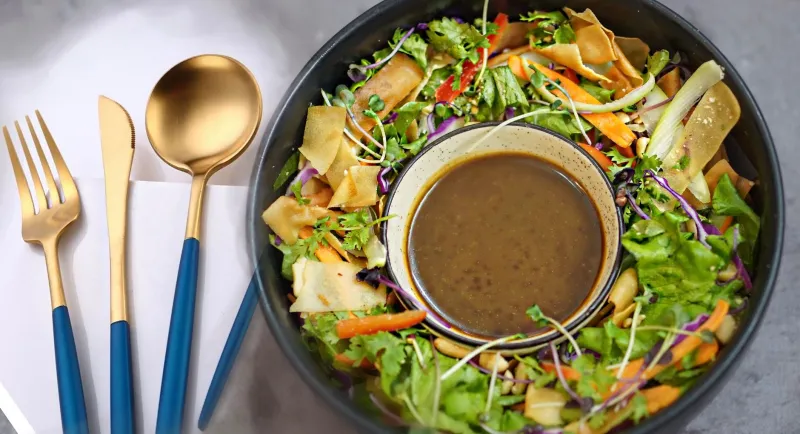
There's a certain comfort in ordering the salad. You skip the burger, wave off the fries, and feel genuinely good about your choices. Meanwhile, the 1,100-calorie bowl of romaine, croutons, candied pecans, and caesar dressing sitting in front of you is doing anything but returning the favor.
This isn't a rare edge case. Across American restaurant chains and even well-intentioned homemade versions, salads have quietly become one of the most calorie-dense meals you can eat — all while wearing a health halo so bright it's practically blinding. And the frustrating part? They often leave you hungrier two hours later than a balanced sandwich would.
Let's pull back the curtain on what's actually in your bowl.
The Dressing Problem Nobody Talks About Enough
If there's one single ingredient doing the most damage to your salad's nutritional profile, it's the dressing. A standard two-tablespoon serving of ranch clocks in around 140 calories and 14 grams of fat. Sounds manageable — until you realize that most restaurants ladle on four to six tablespoons without a second thought. That's potentially 420 calories before you've taken a single bite of lettuce.
Creamy dressings like caesar, blue cheese, and honey mustard are the biggest offenders. They're dense in saturated fat, often loaded with added sugars, and offer almost nothing in terms of fiber, protein, or micronutrients. They simply make everything taste better while quietly inflating your calorie count to burger territory.
Even "lighter" options can surprise you. A balsamic vinaigrette from a popular chain can carry 80–120 calories per serving with a surprising sugar load — and again, portions at restaurants are rarely the neat two tablespoons listed on a nutrition label.
What to do instead: Ask for dressing on the side and use the fork-dip method — dip your fork into the dressing before each bite. You get the flavor without drowning your greens. At home, a simple drizzle of quality extra-virgin olive oil with lemon juice and a pinch of sea salt is genuinely satisfying and comes with actual health benefits.
The Toppings That Sound Healthy and Aren't
Candied walnuts. Dried cranberries. Croutons. Tortilla strips. Wonton crisps. These are the supporting cast that turns a salad from a nutritional win into a glycemic rollercoaster.
Candied nuts are a perfect example of a food that tricks you twice. Nuts, on their own, are a solid source of healthy fats and protein. But once they're coated in sugar and roasted, you're getting a snack food masquerading as a health food. A quarter cup of candied pecans can add 200 calories and 12–15 grams of sugar to your bowl.
Dried fruit is another quiet troublemaker. Dried cranberries, raisins, and those little mango pieces showing up on trendy salads are essentially concentrated sugar bombs. Without the water content of whole fruit, they're easy to overeat and they spike blood sugar fast — the exact opposite of what you want from a meal you're counting on to keep you full and focused.
Croutons and crispy noodles are mostly refined carbohydrates with minimal fiber. They add crunch and not much else, contributing to that mid-afternoon energy crash that feels completely disconnected from the "healthy" lunch you ate.
The Cheese and Protein Trap
Cheese in salads isn't inherently bad — but the amount matters, and so does the type. A generous handful of shredded cheddar or crumbled gorgonzola can add 150–200 calories with a fairly high saturated fat load. If you're also getting a creamy dressing, you're doubling down on fat calories without much nutritional diversity.
On the protein side, crispy chicken is one of the most common swaps people make thinking they're being smart. Grilled chicken: great choice. Crispy (read: fried) chicken: you've essentially added a piece of fast food to your salad. A crispy chicken breast from a popular chain salad can add 300–400 calories on its own, plus a significant sodium hit.
The irony is that inadequate protein — not too much — is often what makes salads unsatisfying. If your bowl is mostly greens, croutons, and dressing with a token amount of actual protein, your hunger hormones will have you rummaging through the break room snack drawer by 3 PM.
Why These Salads Leave You Hungrier Than a Burger Would
Here's the nutritional mechanics of it: a meal that's high in refined carbohydrates and added sugars (croutons, candied nuts, dried fruit, sugary dressings) triggers a rapid rise in blood sugar followed by an equally rapid crash. That crash signals hunger, even if you just ate 1,000 calories.
A well-constructed burger on a whole-grain bun with a side of vegetables, by contrast, might deliver a slower, more stable blood sugar response — especially if it includes a reasonable amount of protein and fiber. Your body stays satiated longer because it's not riding that glycemic wave.
This is a core principle at Instone Nutrition: calories alone don't tell the full story of how a meal affects your body. Satiety, blood sugar stability, and micronutrient density matter just as much — sometimes more.
How to Build a Salad That Actually Works
The good news is that a genuinely nourishing salad isn't complicated. It just requires being intentional about what goes in the bowl. Here's a simple framework:
Start with a fiber-rich base. Romaine, spinach, arugula, kale, or mixed greens all work. The more variety, the better the micronutrient spread.
Add a real protein source. Grilled chicken, hard-boiled eggs, canned wild salmon, edamame, chickpeas, or cottage cheese. Aim for at least 20–30 grams of protein to support satiety and muscle maintenance.
Include a healthy fat — just one anchor fat. Half an avocado, a small handful of raw (not candied) nuts, or a light drizzle of olive oil. You don't need three fat sources fighting for space.
Load up on non-starchy vegetables. Cucumbers, bell peppers, cherry tomatoes, radishes, red onion — these add volume, crunch, fiber, and nutrients without inflating your calorie count.
Use whole fruit instead of dried. Fresh blueberries, sliced strawberries, or apple wedges give you natural sweetness with fiber intact and a much lower glycemic impact than dried alternatives.
Keep the dressing simple and measured. Two tablespoons of a quality vinaigrette or a homemade lemon-olive oil blend is plenty. You'll actually taste your ingredients instead of just tasting dressing.
Skip the croutons or swap them. A tablespoon of roasted pumpkin seeds or sunflower seeds gives you the crunch with added zinc, magnesium, and healthy fats.
The Bottom Line
Ordering the salad isn't automatically the smart move — but it absolutely can be, once you know what to look for. The version that supports your energy, keeps you full, and actually delivers on its nutritional promise looks pretty different from what most restaurants serve as a default.
At Instone Nutrition, we believe that fueling your best self starts with understanding what's really in your food — not just what it's called. A salad built on fiber, quality protein, and smart fats is one of the most powerful meals you can eat. A bowl of greens drowning in caesar dressing with a mountain of croutons? That's just a burger in disguise, and it's not even as satisfying.